Solar area
Review usable roof or site area and relevant shading.

Plan grid-connected solar around the property, available solar area, electrical system and the energy goals behind the project.
Victory Electric helps Cowichan Bay homeowners, property representatives and businesses plan solar electrical installations around usable roof or site conditions, electrical service equipment, inverter and monitoring requirements, interconnection planning and future electrical loads.
Useful solar planning considers the available installation area, shading, electrical service equipment, proposed system equipment and how electricity use may change in the future. Those details help define what still needs to be assessed before the electrical scope is finalized.
Review usable roof or site area and relevant shading.
Consider panel, service and connection conditions.
Coordinate modules, inverter equipment and monitoring.
Include known plans for EV charging and other new loads.
The exact installation depends on the selected solar design and the property, but these are common electrical areas to consider during early planning.

Review electrical service equipment, distribution conditions and the proposed solar connection in the context of the property.
Solar panel services
Align modules, inverter equipment, required shutdown components, monitoring and electrical routing with the approved solar design.
Solar installation planning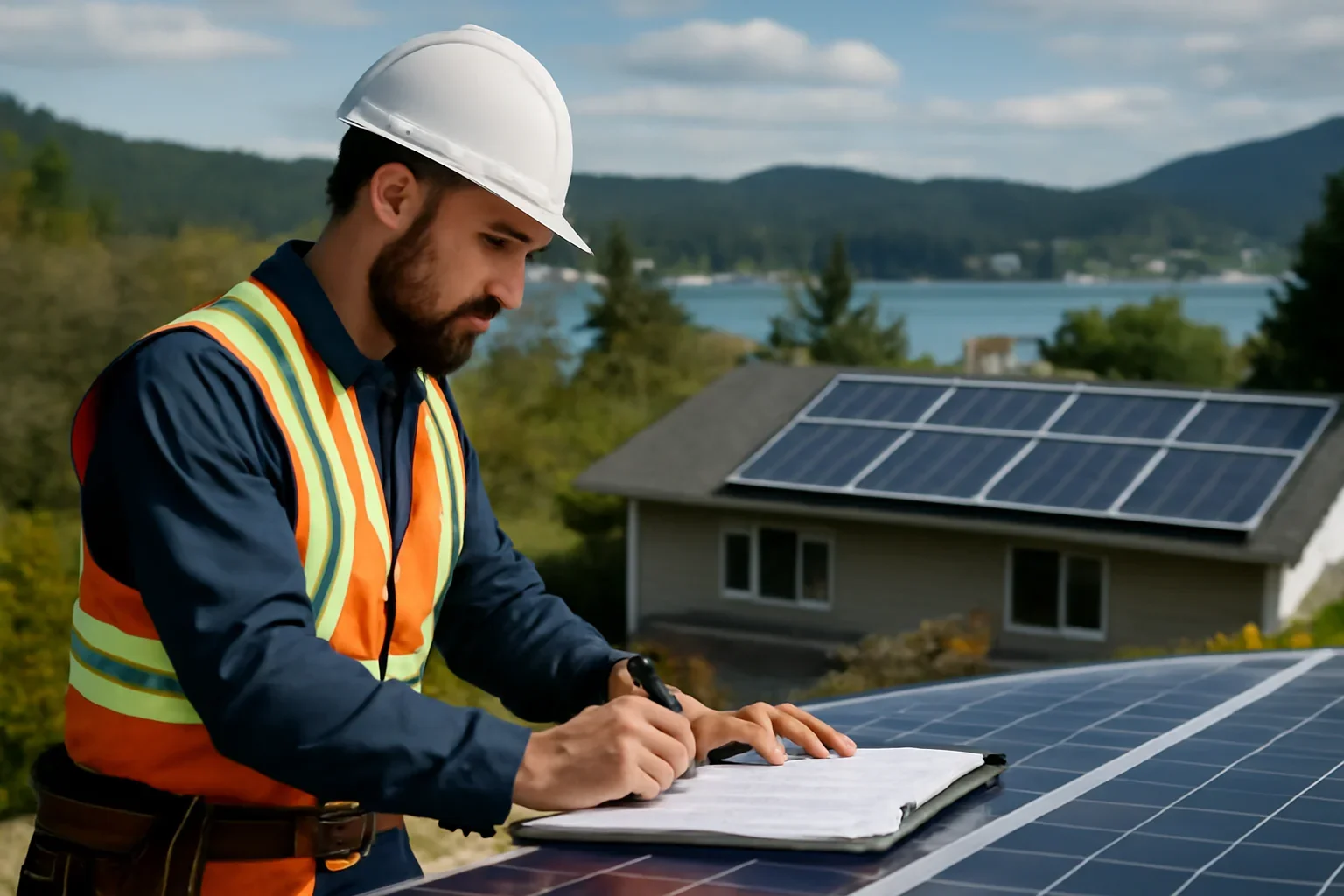
Account for applicable electrical approvals, inspections and utility interconnection steps once the system scope is defined.
Permits & inspections
Identify panel, pathway or other electrical work that may support a current solar installation or a future solar plan.
Cowichan Bay panel upgradesA property may have useful solar area but still require electrical planning before installation. Likewise, suitable electrical equipment does not determine how much usable solar area is available. Both sides of the project matter.
Review where panels may be located and what physical or shading conditions could affect the proposed layout.
Existing service equipment and distribution conditions help determine what electrical work needs further review.
Inverter equipment, disconnecting equipment and wiring routes need practical locations within the approved system design.
EV charging, electric heating and other planned loads can provide important context for broader energy planning.
Roof or site conditions, electrical infrastructure, equipment locations and future energy plans all influence the final solar installation.
Solar, EV charging and other electrification projects interact with the same property electrical system. Sharing known future plans creates better context for current electrical decisions.
Start with the solar goal, available installation area and proposed equipment approach.
Review the existing distribution equipment and electrical connection requirements in context.
Share known plans for EV charging, heating or other significant electrical additions.
Consider how today's electrical work could interact with future solar or electrification improvements.
System equipment is only part of the project. Installation area, electrical conditions, routing, equipment locations and approval requirements can also affect scope and pricing.
| Project factor | Why it matters | Helpful information |
|---|---|---|
| Available solar area | Roof or site dimensions and shading can affect the practical panel layout. | Exterior photos and available property information. |
| Electrical service | Existing distribution equipment influences interconnection and any related electrical work. | Clear photos of the panel exterior and labels. |
| Selected equipment | Inverter, module, monitoring and shutdown equipment affect the electrical design. | Equipment specifications when already selected. |
| Wiring route | The path between solar equipment and the building electrical system affects installation work. | Photos showing likely equipment and routing areas. |
| Approvals & interconnection | Applicable electrical and utility steps can influence the project sequence. | Confirm once the proposed system and electrical scope are defined. |
The exact project sequence depends on the system, property and applicable approval process, but useful planning starts with the actual site and electrical conditions.
Send the Cowichan Bay address, solar goals, site photos, panel photos and known future electrical plans.
Consider the proposed solar area, electrical conditions, equipment approach and information still needed.
Finalize the electrical scope and account for applicable approvals, equipment and interconnection steps.
Complete the approved electrical work, test the installation and provide relevant system handover information.
If the solar review identifies related electrical work or you are planning additional electrical loads, these Cowichan Bay service pages provide more focused information.
Explore electrical work that may connect with a solar project.
Explore dedicated solar electrical pages for nearby Cowichan communities.
Solar suitability and electrical scope depend on the actual property, selected system and applicable project requirements.
Share the property address, exterior and solar-area photos, panel photos, the reason for considering solar and any future electrical plans. Victory Electric can use those details to identify the next assessment step and what information is still needed.