Energy use
Use actual consumption and future plans to guide system objectives.

Plan a grid-connected solar system around the property’s real roof or site conditions, electrical service, energy use and future loads. Victory Electric helps Colwood homeowners, strata representatives and businesses coordinate electrical suitability, equipment locations, permits, BC Hydro self-generation approval and installation sequencing before the project moves forward.
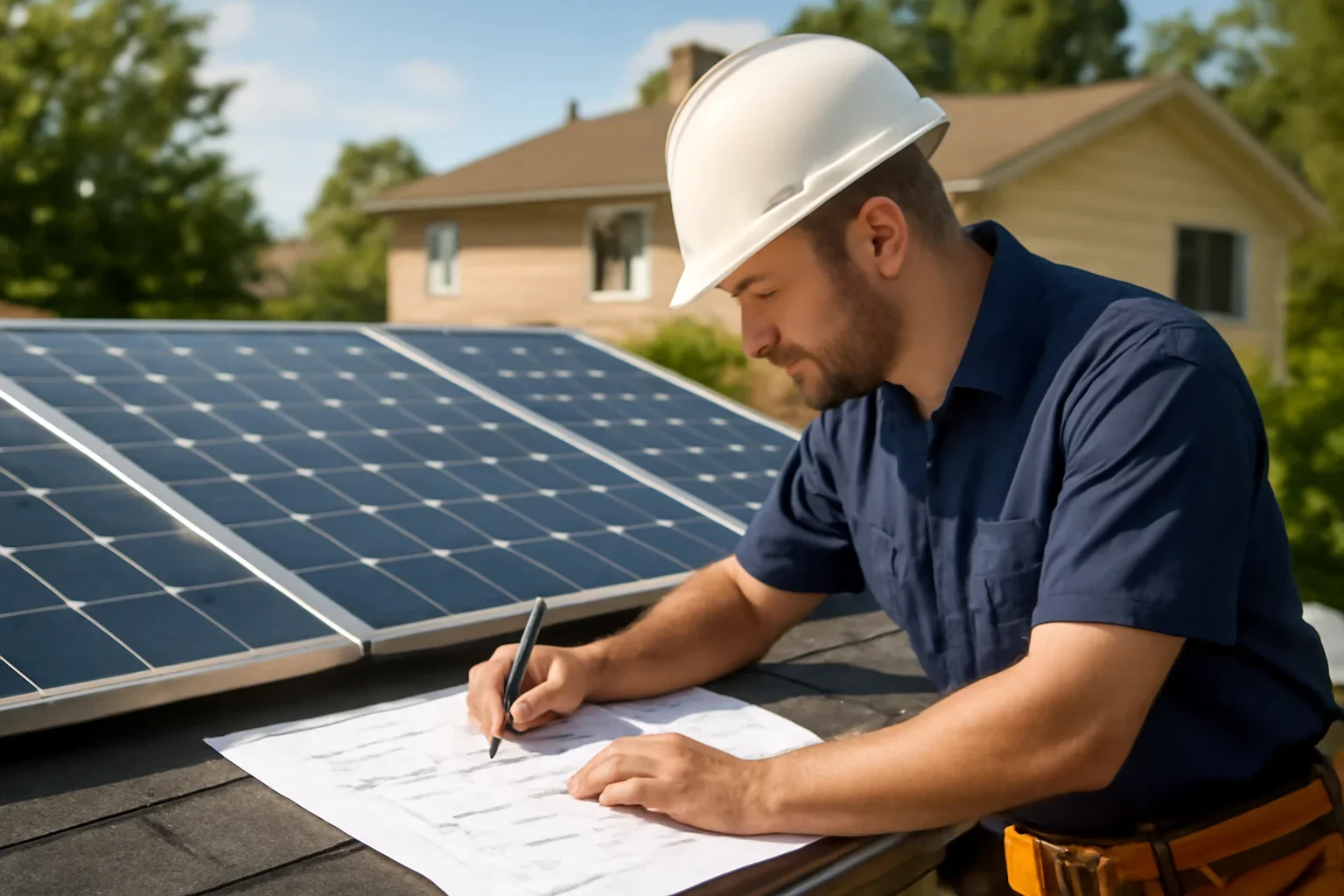
A solar proposal should connect expected production with how the property actually uses electricity. The first review should consider recent energy consumption, roof or ground-mount conditions, shading, structural responsibilities, service and panel readiness, inverter and disconnect locations, cable pathways, future loads and the utility approval process.
Use actual consumption and future plans to guide system objectives.
Review orientation, usable area, shade, obstructions and roof condition.
Assess service equipment, panel space, grounding and interconnection needs.
Account for EV charging, heat pumps, suites and possible battery storage.
The final scope depends on the selected system, property conditions, electrical design and approval requirements confirmed during assessment.

Assess the service, panel, grounding, interconnection point, equipment locations and pathways needed to support the proposed solar system.
Explore solar installation
Align modules, inverter strategy, rapid-shutdown equipment, monitoring, electrical drawings and BC Hydro application requirements.
Review permit planning
Coordinate roof or site work, electrical installation, required testing, utility steps, monitoring setup and final project documentation.
Request project guidanceMatch the electrical design to the selected equipment, usable solar area and project goals.
Identify whether panel, distribution, grounding or service work belongs in the project scope.
Confirm system operation, monitoring access, labels, shutdown information and documentation.
Colwood properties include established homes with mature trees, newer neighbourhoods with different roof forms, multi-unit buildings and commercial sites. A broad roof near Royal Bay may offer a different solar opportunity from a shaded or complex roof near Hatley Park, Lagoon or Wishart. The system should be planned from measured site conditions rather than a city-wide production assumption.
Orientation, pitch, shade, weather, system losses, equipment and future energy use all affect project results. Use a documented estimate rather than a guaranteed savings claim.
A useful proposal separates confirmed site information from assumptions and explains how the system connects to the property’s electrical and energy plan.
| Planning item | Why it matters | What should be reviewed |
|---|---|---|
| Historical electricity use | Helps connect the solar objective with current consumption and seasonal patterns. | Recent bills, annual use and planned changes to household or business loads. |
| Roof or site suitability | Determines usable solar area and influences array layout, access and production estimates. | Orientation, pitch, shade, obstructions, roof condition and structural responsibility. |
| Electrical service readiness | The system must connect safely to the existing service and distribution equipment. | Panel condition, ratings, spaces, grounding, meter location and interconnection approach. |
| Equipment and locations | Inverters, disconnects, monitoring and pathways need suitable accessible locations. | Selected products, manufacturer instructions, environmental exposure and cable routing. |
| Future electrification | EV charging, heating, suites or storage can change the best system and capacity plan. | Expected equipment, timing, operating priorities and backup-energy goals. |
| Utility and incentive requirements | Eligibility, contractor, equipment and application rules can affect project sequencing. | Current BC Hydro self-generation, interconnection and rebate terms before purchase. |
Solar savings, production and payback depend on the property, equipment, financing, electricity use, current utility rates and program terms. Review the documented assumptions before relying on projections.
Solar projects involve design, regulated electrical work and BC Hydro approval. Defining responsibilities and application timing early helps prevent equipment or installation decisions from getting ahead of approval requirements.
Share the Colwood address, electricity-use information, roof details, electrical photos and future energy plans.
Assess usable solar area, shading, roof responsibility, service equipment, panel readiness and practical equipment locations.
Confirm system equipment, electrical drawings, permits, BC Hydro application steps, rebate conditions and project sequence.
Complete the approved work, testing, utility requirements, monitoring setup, labels and handover documentation.
BC Hydro closed its previous net-metering rate to new customers and introduced Self-Generation Rate Schedule 2289 on July 1, 2026. Under the current program, eligible grid-connected systems first serve the property’s electricity use, while excess energy exported to the grid earns monetary generation credits at the published rate. The system must be accepted for interconnection, and electrical installation requires the applicable Technical Safety BC permit.
Solar, EV charging, heating, backup power and panel capacity influence one another. Sharing the complete plan helps avoid disconnected equipment decisions.
Review service and distribution readiness for solar and future electrical loads.
Coordinate vehicle charging demand with solar production and household capacity.
Define backup-power goals separately from standard grid-connected solar operation.
Review accessible electrical conditions, capacity and upgrade priorities before design.
The correct answer depends on the site, electrical system and current program terms, but these answers explain what usually needs to be confirmed.
No. Suitability depends on usable roof area, orientation, shade, roof condition, structural responsibility, electrical readiness and the property’s energy goals. Some properties may be better suited to a smaller array, ground-mounted approach or preliminary upgrades.
BC Hydro closed its previous net-metering rate to new customers. Since July 1, 2026, new eligible projects apply under the Self-Generation Rate Schedule 2289.
The solar electricity generated on site first serves the home or business. Eligible excess electricity sent to the grid earns monetary generation credits under the current published self-generation terms.
A standard grid-connected solar system generally shuts down during a grid outage for safety. Backup operation requires a specifically designed system with compatible equipment, controls and usually energy storage or another approved backup source.
Yes. Reviewing major future loads together supports better system sizing, panel-capacity planning, pathway decisions and a clearer picture of future electricity use.
No. Funding, eligibility, equipment and contractor requirements can change. Confirm current BC Hydro terms and receive the required approvals before relying on a rebate in the project budget.
Share the address, electricity-use information, roof details, panel photos and future plans for EV charging, heating or storage. Victory Electric can review the information and identify the next assessment step for a practical solar electrical scope.
Call Victory Electric: (778) 817-0818