Main service
Review service size, panel condition and the utility connection.

Plan an electrical panel or service upgrade around the full Metchosin property—not only the equipment beside the main panel. Victory Electric reviews the existing service, panel condition, connected loads, outbuildings, long feeders, pumps, workshops and future electrical plans before defining the upgrade.
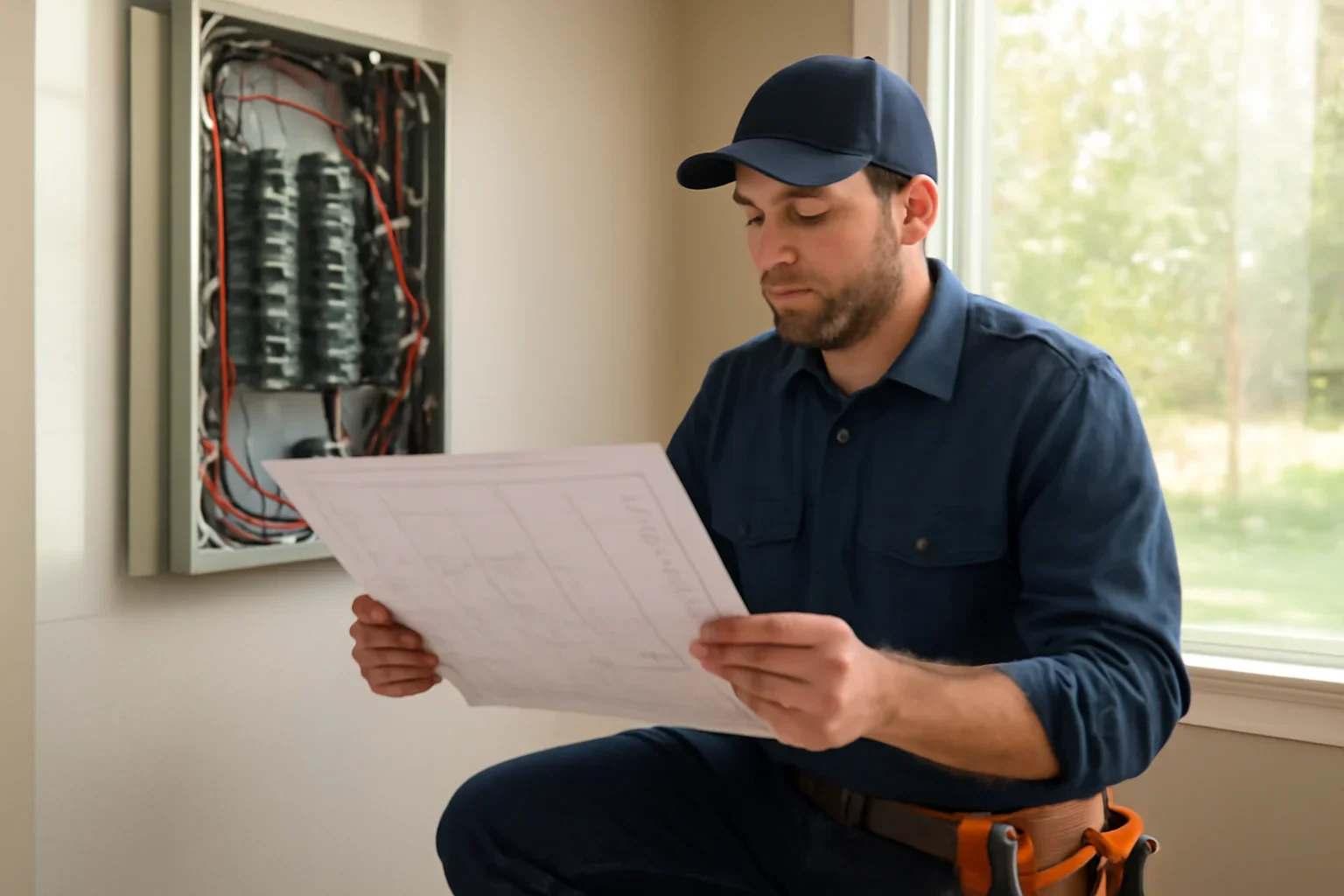
A panel replacement and a service-capacity upgrade are not the same project. The assessment should identify the existing service rating, panel condition, available breaker space, demand across the property, feeder sizes, remote panels and whether a panel replacement, service upgrade, subpanel, feeder improvement or approved load-management approach is appropriate.
Review service size, panel condition and the utility connection.
Include barns, shops, pump houses, studios and other supplied structures.
Plan EV charging, heat pumps, suites, hot tubs and equipment together.
Assess feeder length, trenching, overhead routes and voltage-drop concerns.
The approved scope depends on the existing installation, property layout, calculated demand, planned equipment and coordination requirements confirmed during assessment.

Replace aging, damaged or unsuitable distribution equipment with a clearly labelled, serviceable panel matched to the approved design.
Explore panel upgrades
Plan changes to service equipment where calculated demand, equipment or site expansion requires additional approved capacity.
Review permit planning
Review homes, suites, workshops, pumps, barns, studios and future electrification as one connected system.
Request project guidanceReview feeder capacity, panel locations and route conditions for barns, shops and detached buildings.
Coordinate vehicle charging, heat pumps, electric water heating and other large loads.
Consider generation, storage or generator equipment alongside service and distribution decisions.
Metchosin is a rural community with large residential lots, hobby farms, agricultural land and limited commercial activity. Electrical loads may be spread across a home, barn, workshop, pump house, studio or other detached building. The correct upgrade depends on how power reaches each structure and how the property is expected to change.
A load calculation and site assessment help determine whether the right path is a service upgrade, panel replacement, subpanel, circuit work or an approved capacity-management option.
These situations do not automatically confirm that a full service upgrade is required. They identify when the existing system, calculated demand and property distribution should be reviewed.
| Project or concern | What needs to be reviewed | Possible project direction |
|---|---|---|
| Adding an EV charger or heat pump | Existing demand, equipment rating, main panel, service size and other large loads. | Dedicated circuit, load management, panel work or service upgrade depending on the assessment. |
| Expanding a workshop or barn | Machinery loads, feeder length, voltage drop, remote panel capacity and operating patterns. | Feeder improvement, subpanel work, equipment circuit or broader service-capacity planning. |
| Building a suite or addition | New kitchen, laundry, heating and general-use loads across the existing property system. | Panel replacement, service upgrade, subpanel or coordinated branch-circuit work. |
| Planning solar, storage or a generator | Interconnection, transfer equipment, service arrangement, panel compatibility and backup goals. | Panel changes, service coordination or a future-ready distribution design. |
| Panel is full, aging or poorly labelled | Equipment condition, circuit use, previous modifications, available spaces and connected demand. | Corrections, circuit tracing, subpanel, panel replacement or complete service planning. |
| Adding a hot tub, pump or remote building | Equipment rating, route distance, outdoor conditions, feeder size and main-service capacity. | Dedicated supply, feeder work, remote distribution or service upgrade based on findings. |
Do not remove electrical panel covers or approach exposed, wet, damaged, arcing or unusually hot equipment to gather information. Describe the issue from a safe distance.
Panel and service work may involve electrical permits, utility coordination, a planned outage and access to several buildings. Defining those requirements early makes the estimate and project schedule more useful.
Provide the Metchosin address, building uses, panel photos, major equipment, future loads and a simple site layout.
Review the main service, panel condition, remote panels, feeders, connected loads, distances and access.
Confirm equipment, routing, shutdown planning, permit responsibilities, assessment requirements and owner decisions.
Carry out the approved work, test the installation and provide clear information about the upgraded system.
The District of Metchosin directs electrical-permit enquiries to Technical Safety BC. Service, main-panel and feeder upgrades must be completed under a valid electrical permit. When a licensed contractor is hired, the contractor applies for the electrical permit. Building or structural work connected with the project may also require District review.
Reviewing capacity, backup power, remote buildings and future loads together can reduce the chance of upgrading one part of the property without accounting for the rest.
Plan home or fleet charging alongside service capacity and long property routes.
Coordinate generator capacity, transfer equipment and priority loads with the main service.
Review solar interconnection and future generation alongside panel and service decisions.
Coordinate aging wiring, renovations and circuit improvements with panel work.
The correct answer depends on the existing service, property distribution and planned loads, but these answers explain what usually needs to be assessed.
No. The answer depends on the existing service, calculated demand, equipment rating, other loads and whether an approved load-management option applies.
It may, but the design depends on feeder capacity, distance, voltage drop, building use, disconnecting requirements and the approved distribution arrangement.
No. A panel replacement changes distribution equipment. A service upgrade changes the service capacity or related service equipment. Some properties need one; others require both.
Panel and service work generally requires a planned outage. The timing depends on the scope, permit assessment, utility coordination and whether remote buildings or critical equipment are affected.
The District of Metchosin directs electrical-permit enquiries to Technical Safety BC. When a licensed electrical contractor is hired, the contractor applies for the permit.
Send the property address, safe photos of the service and panels, a list of buildings and large loads, planned equipment, approximate distances and any access or shutdown restrictions.
Share the main service details, buildings, major equipment, future loads, approximate distances and preferred timing. Victory Electric can review the information and identify the right assessment path for a practical panel or service-upgrade scope.
Call Victory Electric: (778) 817-0818