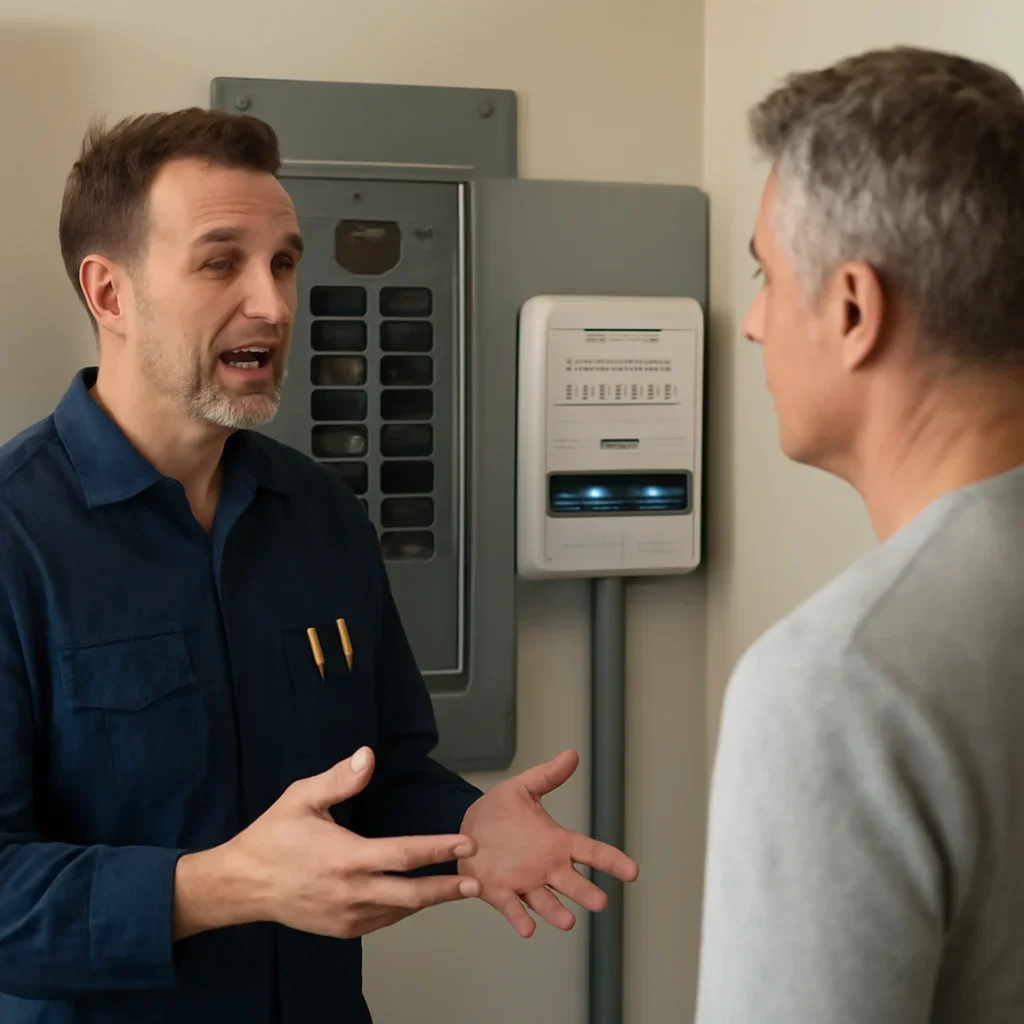
Service assessment
Review panel compatibility, grounding and available installation space.


How surge protection works and when it is useful. This safety-first guide explains the planning factors, questions and professional next steps without turning general information into do-it-yourself electrical instructions.
The useful next step is to match the question to the actual electrical system, equipment, property conditions and decision the owner needs to make.
Use these factors to organize the decision and identify which details still need professional confirmation.
Review panel compatibility, grounding and available installation space.
Match the surge protective device to the electrical system and manufacturer requirements.
Install the device in the approved location with clear identification and service access.
Combine panel-level protection with suitable point-of-use protection for sensitive equipment where appropriate.

The property, electrical system and selected equipment determine the final scope. A guide can improve the first conversation but cannot replace assessment.
| Area | What it means | Practical next step |
|---|---|---|
| Existing conditions | Panel and service configuration | Provide safe photos and available records. |
| Capacity and equipment | Grounding and bonding condition | Include model numbers and future loads. |
| Access and coordination | Sensitive electronics and connected equipment | Note finished areas, other trades and timing. |
| Approvals and handover | Exposure to utility switching or local storm activity | Confirm permits, testing and documentation. |
The sequence helps prevent premature equipment purchases and keeps safety, capacity and approvals in the decision.
Explain what the property should support when the work is complete.
Use photos, model details, drawings and property records.
Confirm capacity, access, approvals and equipment compatibility.
Document the work, assumptions, responsibilities and next steps.
The matching service page explains scope, assessment details and project information for whole-home surge protection. Use it when the research is ready to become a project request.
Do not remove electrical covers, probe circuits, bypass protective devices, backfeed a building, or keep resetting equipment that is operating protectively. Use a qualified electrician for electrical diagnosis and installation.
No. The article organizes planning questions, but concealed conditions, capacity, equipment compatibility and the cause of a fault require site-specific review.
Involve an electrician before major equipment purchases, when capacity or permits are uncertain, and whenever there are electrical warning signs or work beyond safe owner observation.
Gather the property location, photos taken safely, panel information, equipment model details, drawings, known symptoms, future loads and preferred timing.
A single electrical change can affect panel capacity, future loads, permits or other equipment. Include related plans so the review is not limited to one device in isolation.
Share the property, photos, equipment, intended result and timing. Victory Electric can identify which information or assessment is needed before the scope is finalized.